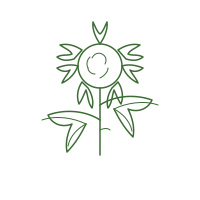
A hollyhock is a two-year commitment. You plant a seed in spring or early summer, and that first season it produces a low rosette of rounded leaves. It overwinters as that rosette — the taproot goes deep — and the following summer it sends up a flower spike that can reach six or seven feet, covered in blooms that en from the bottom up over the course of weeks. If you want flowers this year, buy a second-year plant from a nursery. If you have patience, sow seed and wait.
The unavoidable problem is hollyhock rust. By midsummer in most climates, the lower leaves develop orange pustules on the undersides, and the leaves yellow and drop. It rarely kills the plant, but it looks terrible. The spores overwinter on plant debris, so pulling off affected leaves and clearing the bed in fall can slow the spread, but in humid climates the disease tends to return every year. The practical solution is to plant hollyhocks where someg shorter — lox, catmint, a low shrub — will mask the bottom third of the plant.
Hollyhocks are deeply taprooted once established, which means they tolerate dry spells better than many border but also means they resent being moved. them young if you must transplant them at all, and do it in early spring before the taproot has gone too deep. A hollyhock moved in full leaf will sulk and may not recover.
The flowers attract bees and hummingbirds, and the Japanese beetle if you have them. The beetles chew ragged holes in the blooms and can strip a spike in a few days if the infestation is heavy. Hand-picking in the morning when they're sluggish is the most effective control for a small planting.
Hollyhocks self-sow readily if you let the seed heads dry on the stalk, and the seedlings that come up the following spring tend to be hardier than anything you deliberately plant. The colors may not come true if you're growing a mix, but that is part of the cottage-garden charm — a stand of hollyhocks that reseeds itself year after year, in a slightly different arrangement each time, feels more rooted in the place than a carefully planned border ever does.
Varieties worth knowing
What can go wrong
Companions
How to propagate
Hollyhock is a biennial or short-lived perennial grown almost exclusively from seed. It self-sows readily, and once you have hollyhocks in the garden, you will likely always have them.
Harvest & keep
Biennial or short-lived perennial — self-seeds. Rust is the main problem; strip lower leaves.
- Refrigerator
- 3–5 days cut
- Freeze
- not applicable
- Can
- not applicable
- Dry
- petals dry for tea and dyeing; flowers lose form
Black hollyhock petals make a lovely tea and natural dye.