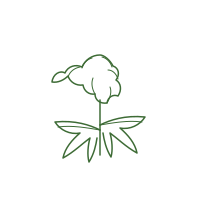
Kohlrabi is a fast, unusual vegetable — not a root, not a leafy green, but a swollen stem that sits at soil level and bulges outward like a small alien spacecraft. The edible part is the enlarged base of the stem, crunchy and mild, tasting someg like a cross between broccoli and a water chestnut. It matures in about seven weeks from seed and tolerates cold better than most spring vegetables. The main thing most gardeners get wrong is not missing it — it's that they let it get too big.
seeds about four weeks before your . Kohlrabi quickly in cool soil and the seedlings are cold-tolerant. Thin to six inches apart once plants are a few inches tall. In a small bed, every two to three weeks can extend the harvest window through late spring. For a fall cr, sow about eight weeks before your first expected fall frost.
Kohlrabi wants consistent moisture and soil with reasonable fertility. It does not need heavy feeding — too much nitrogen and the plant puts energy into leaves rather than the swollen stem. lightly with if the plants look pale, but otherwise the fertility at planting is usually enough for the short season. Keep the soil evenly moist; drought stress causes the stem to become stringy and fibrous rather than crisp.
Harvest when the stem reaches about 2 to 3 inches in diameter. At this size, the texture is mild and crisp. Left to grow larger — 4 inches or more — the stem turns fibrous and woody, especially in warm weather. There is no recovering a woody kohlrabi; the texture doesn't improve with cooking. Check the garden every few days once the stems start to swell. The window from ideal to overripe is often just a week.
is the other timing problem. If temperatures spike above 80 degrees while the plant is still developing, it may send up a flower stalk rather than completing the stem. This is why kohlrabi works best as an early spring or fall crop — it does not tolerate summer heat. The Gigante variety is one exception, bred to stay tender at larger sizes and to handle warmer conditions better than most, but even it has limits.
Varieties worth knowing
What can go wrong
Companions
How to propagate
Kohlrabi is propagated by seed. It is a fast-growing, cool-season brassica that forms an edible swollen stem above ground, and it is one of the easiest and quickest brassicas to grow.
Harvest & keep
Harvest at tennis-ball size — larger bulbs get woody. Giant varieties (Superschmelz) can reach 8 lb and stay tender.
- Refrigerator
- 2–4 weeks (trim leaves, store bulb in a bag)
- Freeze
- peel, dice, blanch 2 minutes, freeze
- Can
- pressure can only
- Dry
- slice and dry at 125°F
- Root cellar
- pack in damp sand at 32–40°F — 1–2 months
Peel the outer layer — it's fibrous even on tender bulbs.
How it grows where you live
Sources
- Kohlrabi— University of Minnesota Extension
- Kohlrabi Production— University of New Hampshire Extension
- Growing Cole Crops in the Home Garden— Oregon State University Extension