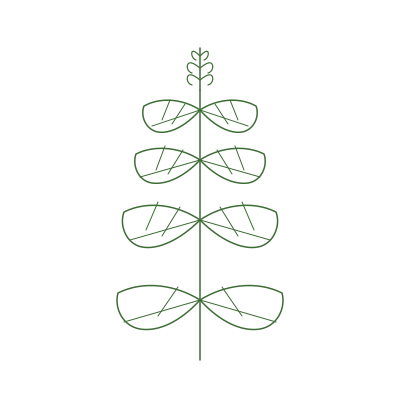
Lemon balm is the mint family member that most gardeners plant once and never have to plant again — because it plants itself. The tiny seeds are produced in large quantities and dr in every direction, and they reliably in almost any soil. A single plant can produce dozens of volunteers wi a 5-foot radius by the following spring. This is either endearing or alarming depending on your garden's available space. The answer, either way, is the same: cut the plant back before it goes to seed.
Despite that enthusiasm for self-seeding, lemon balm is a genuinely useful herb. The leaves smell unmistakably of lemon — a clean, bright lemon scent that is distinct from lemon verbena and lemon thyme. Steeped in hot water, the leaves make a calming tea. Used fresh, they add brightness to fish dishes, fruit salads, and cocktails. The flavor fades quickly when dried or cooked, so most cooks use it fresh or steep it in liquid and then remove the leaves.
Start seeds indoors about 8 weeks before your . Seeds need light to germinate — press them into the surface of the soil without covering. seedlings about 1 week after the last frost. Space plants 12 inches apart; they grow to 2 feet tall and wide by midsummer. In the first year, the plant establishes its root system and produces a modest amount of leaf. By the second year, harvests can be generous.
The best time to harvest is just before flowering — the leaves have the highest essential-oil concentration at this stage. Cut stems back by one-third to one-half. The plant will flush new growth within two weeks. Cutting also delays flowering, which delays seed production. In zones 4 through 9, lemon balm dies back to the ground in fall and regrows reliably from the crown in spring. In zones 8 and 9, it may remain partially green through winter.
Two failure modes worth knowing: first, lemon balm in heavy clay or standing water can develop crown rot over winter, especially in zones 4 and 5. Good drainage at the crown makes the difference between a plant that returns each spring and one that doesn't. Second, in hot, sunny spots, the leaves can turn yellowish and the lemon scent becomes less pronounced. Partial afternoon shade in warm climates keeps the leaves a healthy dark green and maintains flavor quality.
Varieties worth knowing
What can go wrong
Companions
How to propagate
Lemon balm is vigorous and easy to propagate by almost any method. Division is the quickest approach for established plants, which spread aggressively by self-sowing and underground runners. Stem cuttings and seed also work well.
Harvest & keep
Perennial — spreads by seed and rhizome. Cut back hard after flowering for fresh regrowth.
- Refrigerator
- 5–7 days fresh
- Freeze
- chop and freeze in ice cubes — best preservation for flavor
- Can
- not applicable
- Dry
- dry on a screen or dehydrator at 95°F — loses much flavor but usable for tea
Volatile oils are fleeting — use fresh when possible for the full lemon-honey flavor.
How it grows where you live
Sources
- Lemon Balm — Herb of the Month— University of Maryland Extension
- Growing Culinary Herbs in the Home Garden— University of Georgia Extension
- Herbs for the Home Garden— Colorado State University Extension