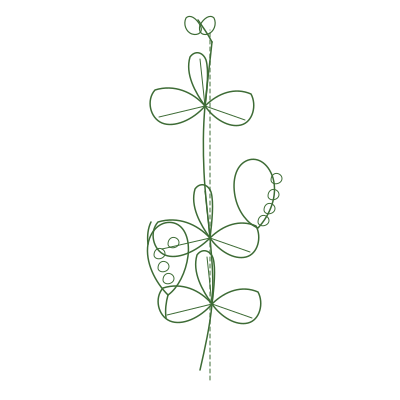
Lima beans are a test of a gardener's ability to plan ahead and wait. They need warm soil to — warmer than snap beans, warmer than most gardeners k — and once they're up, they need a long run of moderate temperatures to flower and set pods. In a short-summer climate, that run may not come. The gardener who plants limas in early June hing for an August harvest often finds the arrives before the pods fill out.
The seed packet often says sixty-five to ninety , but that number assumes ideal conditions — warm days in the seventies, warm nights above sixty, and no heat spikes during flowering. When temperatures climb above ninety degrees while the plant is blooming, the flowers drop. No pollination, no pods. The plant may look healthy, may even set new flowers a week later when it cools down, but a week of lost bloom time in a short season is time the plant doesn't get back.
Bush types tend to mature faster than pole types, sometimes by two or three weeks, which can make the difference between a harvest and a frost-killed planting in zones five and cooler. Henderson Bush and Fordhook 242 are the varieties to choose if your is under a hundred days. The larger-seeded pole varieties like King of the Garden and Christmas can take a hundred days or more, and they're a gamble north of zone seven unless you're willing to start them indoors and — which lima beans tolerate poorly.
Soil temperature at sowing matters as much as air temperature. Lima bean seeds rot in cool, damp soil. Wait until the soil is at least sixty-five degrees at a depth of two inches — warmer is better — and sow directly. Transplanting from pots is possible but tends to set the plants back; they're happier when their roots never get disturbed. Sow one week after your at the earliest, two weeks is safer in most climates.
Nitrogen is not what lima beans need from you. They fix their own nitrogen from the air, and soil that is too rich in added nitrogen pushes the plant toward leaves and away from pods. A modest of is enough. What they do need is consistent moisture during pod fill — not soaking wet, but never bone-dry. A plant that gets stressed for water when the seeds are swelling will drop half its pods.
In the fall, pick the pods when they feel plump but before the beans inside get starchy. Fresh lima beans have a creamy, buttery texture that dried beans can't match. If frost is forecast and the pods are still green, pull the whole plant and hang it upside down in a dry place — the beans will often finish filling out off the vine.
Varieties worth knowing
What can go wrong
Companions
How to propagate
Lima beans are direct sown after all danger of frost has passed and soil has warmed to at least 65 F. They do not transplant well due to sensitive roots.
Harvest & keep
Long warm season needed — 90 days plus heat. Pods don't tolerate frost.
- Refrigerator
- 5–7 days in pods
- Freeze
- shell, blanch 3 minutes, freeze in bags
- Can
- pressure can only
- Dry
- let pods dry fully on plant; thresh and store 1+ year
Always cook before eating — raw limas contain cyanogenic glycosides. Cooking destroys them.
How it grows where you live
Sources
- Lima beans in the home garden— University of Minnesota Extension
- Growing lima beans— Clemson Cooperative Extension HGIC
- Lima bean production— Penn State Extension