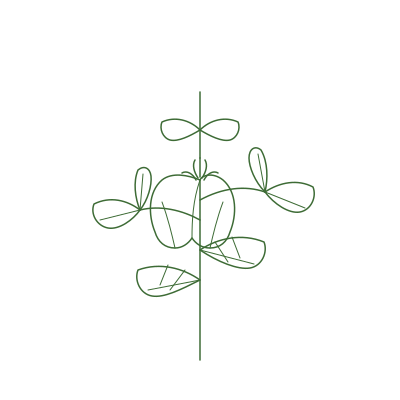
A pepper is slower than almost anyg else you'll grow. It needs more heat than a tomato, takes longer to , grows more slowly as a seedling, and sits for weeks after before it starts setting fruit. In a short-season garden, a pepper plant may give you three or four fruit before frost — not because you did anything wrong, but because the plant wasn't bred for your climate.
Start seeds indoors eight weeks before your , and even then, expect germination to take ten to fourteen days. The seeds need soil above seventy degrees to sprout reliably; a under the seed tray makes a noticeable difference. Once the seedlings are up, they grow in slow motion compared to tomatoes — by the time you're ready to transplant, a pepper seedling may be only four inches tall with a few sets of .
Wait longer than you think to transplant. Peppers sulk in cool soil even more dramatically than tomatoes — a plant set out into sixty-degree soil may turn purple at the leaf margins, a stress response to cold roots, and stall for a month. Wait until nights are reliably above fifty-five and the soil is genuinely warm to the touch. Two weeks after your last frost is usually the earliest safe window, and three weeks is often better.
Once the weather warms, peppers respond to consistent conditions more than heavy feeding. Water deeply when the t inch of soil is dry; uneven moisture causes blossom drop, and in hot climates, a pepper that goes from dry to soaked and back again will drop its flowers and refuse to set fruit. helps maintain even soil moisture and keeps the roots from overheating in midsummer.
Peppers are more prone to pest pressure than many gardeners expect. Aids, flea beetles, and cutworms all favor young transplants; a for the first few weeks after transplant can prevent early losses. Later in the season, pepper maggots and corn borers may tunnel into the fruit — damage usually shows as soft spots or holes near the stem end.
At season's end, pick any pepper that has reached full size, even if it hasn't changed color yet. A green bell pepper picked before frost will not ripen further indoors, but it's still usable. Hot peppers, on the other hand, often ripen on a sunny windowsill if they've started to show color on the plant.
Varieties worth knowing
Growth habit — pick before you buy seed
The same crop can grow as a compact bush, a sprawling vine, or something in between. Choose the habit that fits your space and how you want the harvest to arrive — all at once, or a steady trickle.
Most peppers grow as a compact bush 2–3 feet tall. Single or double leader on stakes improves air flow and yield.
Pruning & support: Light pruning — remove suckers below the first flower fork. Stake or cage.
What can go wrong
- Carolina Wonder — Root-knot nematode · Bell pepper bred at NC State specifically for nematode-heavy southern soils.(vs Root-Knot Nematode)
- Aristotle — Phytophthora root rot, TMV · Bell pepper — common in southern gardens with disease pressure.(vs Verticillium Wilt)
Companions
How to propagate
Peppers are started indoors from seed well before the last frost, as they need a long warm season to produce. They are slow to germinate and require consistent warmth for both germination and seedling growth.
Harvest & keep
Heat lover — yield drops when night temps fall below 55°F. Harvest green or let ripen to red for sweetness.
- Refrigerator
- 1–2 weeks (wash right before use)
- Freeze
- wash, dice or slice, freeze raw in bags — peppers freeze exceptionally well without blanching
- Can
- pickle peppers in vinegar (water-bath); or pressure can plain
- Dry
- thread hot peppers on string and air-dry (ristra); dehydrate bells at 125°F
Capsaicin is oil-soluble — wear gloves with hot peppers and don't touch your eyes.
How it grows where you live
Sources
- Growing peppers in the home garden— University of Minnesota Extension
- Pepper— Clemson Cooperative Extension HGIC
- Peppers in the garden— Colorado State University Extension
- AnthracnoseSunken, dark circular lesions on ripening fruit, sometimes with salmon-colored spores in the center.
- AphidSoft, clustered insects on new growth causing curled leaves and sticky honeydew.
- Blossom DropFlowers fall before setting fruit, often during temperature extremes or after weather stress.
- Blossom End RotDark, sunken, leathery patch on the blossom end of tomato or pepper fruit — a calcium deficiency disorder.
- Gray Mold (Botrytis)Gray-brown fuzzy mold on fruit, flowers, or stems — soft, collapsing tissue beneath the coating in cool, wet conditions.
- I have aphids on multiple plants — do I need to spray everything?Aphids tend to colonize plants under stress and naturally crash when beneficial insects find them — water sprays and patience are often more effective than pesticides.
- Why do my pepper flowers drop off before the peppers form?Pepper flowers drop most often because night temperatures are outside the 55–75°F range for fruit set, or because daytime heat above 90°F has made pollen non-viable — stress from drought or excess nitrogen can also cause flowers to abort.
- What is that black leathery patch on the bottom of my tomatoes?Blossom end rot is a calcium deficiency at the fruit level, almost always caused by irregular watering rather than a lack of calcium in the soil.
- Something is cutting off my seedlings at the base overnight — what is it?Cutworms — fat gray or brown caterpillars that live in the soil and feed at night — cut young stems at or just below the soil surface, and a simple collar around each stem can stop them.
- What does drought stress actually look like, and how do I know when to water versus when something else is wrong?Drought stress progresses from midday wilting to all-day wilting, leaf curl, and eventually aborted fruit and flowers — the key is catching it before the plant has been dry long enough to abort reproductive structures.
Save seed from this plant
Hot and sweet peppers cross — isolate 500 ft or cage with pollinator access.