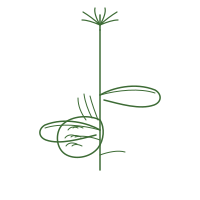
Corn is the one vegetable in the summer garden that cannot be grown as a single plant, or even as a single row. It is wind-pollinated, and pollen from the tassels at the t of the plant has to land on the silks of an adjacent plant to fill the ear. A single row of corn produces poor pollination, misshapen ears with skipped kernels, and a lot of stalk for very little food. The minimum planting for reasonable pollination is a block at least four plants wide in every direction — which is why corn demands garden space the way no other vegetable does.
Sow seeds directly in the ground at your , or up to two weeks before if the soil is already at 50°F. Corn does not well — the root system is large and fibrous, and is significant. Plant seeds one inch deep and twelve inches apart in rows spaced about 30 inches apart. If you're planting multiple varieties, keep them at least 250 feet apart, or stagger planting dates so they don't silk at the same time. Cross-pollination between a sweet and a starchy variety ruins the sweetness of both.
Corn is a heavy nitrogen feeder, and you'll see that demand clearly. If the lower leaves are yellowing from the tip back and fading to a pale, washed-out green, the plant is nitrogen-starved. with a high-nitrogen fertilizer or a heavy application of when the plants are knee-high, and again when they begin to tassel. Consistent moisture at the tasseling and silking stage matters as well — drought stress at pollination time reduces kernel fill significantly.
Sweet corn has a narrow harvest window that surprises gardeners the first time. From the day silks emerge to peak eating quality is typically about 20 days, and from peak to past-peak is another three or four days. The sugars convert to starch quickly at warm temperatures — older sweet varieties were best picked and cooked the same day; modern super-sweet varieties hold their quality longer but still don't wait for you. Check ears when the silks turn brown and dry: puncture a kernel with your thumbnail. Milky juice means it's ready. Clear juice means another day or two. No juice means it has already peaked.
Raccoons know when sweet corn is ready before you do, and they will arrive the night before you planned to pick. A temporary electric fence run around the patch — two strands, one at six inches and one at twelve inches — is the most reliable deterrent in areas with heavy raccoon pressure. Other approaches (, noise devices) tend to work for a night or two before the animals adapt. Plan ahead, not the morning after.
Varieties worth knowing
What can go wrong
Companions
How to propagate
Corn is grown exclusively from seed and must be direct sown in the garden. It does not transplant well due to its sensitive taproot and is always planted in blocks rather than single rows for proper wind pollination.
Harvest & keep
Plant in blocks (not rows) for pollination — at least 4x4. Harvest window for sweet corn is only 3–5 days.
- Refrigerator
- 2–3 days fresh in husk (sugar converts to starch fast)
- Freeze
- blanch 4 minutes on cob; cut off for kernels; freeze in bags 8–12 months
- Can
- pressure can only — never water bath
- Dry
- dry fully on the stalk for cornmeal or parched corn
Super-sweet types (se, sh2) hold sugar longer; standard (su) varieties must be cooked within hours.
How it grows where you live
Sources
- Growing Sweet Corn in Home Gardens— University of Minnesota Extension
- Sweet Corn in the Home Garden— University of Maryland Extension
- Home Vegetable Gardening — Sweet Corn— Oregon State University Extension
- Bird DamageBerries pecked or missing, seeds scratched from beds, and seedlings dislodged — birds feeding on ripe fruit, seeds, or soil grubs.
- Brown Marmorated Stink BugSunken, corky dimples on fruit and pods caused by a mottled brown shield bug feeding through the skin.
- Corn Earworm / Tomato FruitwormCaterpillars eating corn kernels from the tip; same species bores into tomato and pepper fruit. Often called 'tomato fruitworm' when found on tomato.
- EarwigOvernight holes in petals, seedlings, and soft leaves — earwigs shelter by day and feed at night.
- Japanese BeetleLacy skeletonized leaves with clusters of metallic green-and-copper beetles feeding in full sun.
- Why do my seedlings or young plants have purple or reddish undersides on their leaves?Purple or red coloration on leaf undersides and stems is a common sign of phosphorus deficiency, and cold soil in early spring is often the trigger even when phosphorus is present.
- How do I know if my soil is compacted, and what can I do about it?Compacted soil pools water after rain, resists a probe or screwdriver pushed by hand, and produces stunted plants with shallow root systems — the fix depends on severity and whether you're willing to leave soil undisturbed over time.