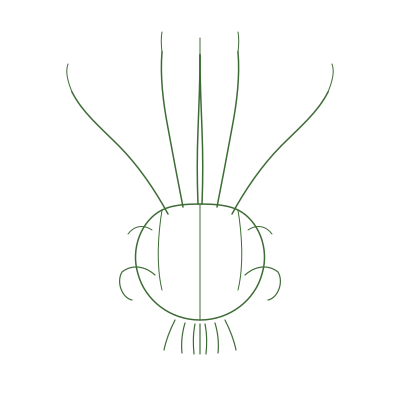
Leeks are the patient gardener's allium. They take longer than almost anyg else in the vegetable garden — from seed indoors in late winter to harvest in fall, the timeline can stretch to eight months. What they give back is a flavor that no other allium quite matches: mild, sweet, with none of the sharpness of onion, and they hold beautifully in the garden through the first hard frosts, sweetening as the temperature drs.
Start seeds indoors 10 weeks before your . Leek seedlings are slow — they'll spend their first weeks looking like thin grass, and they should be about the diameter of a pencil before . When you do transplant, use the dibble-and-drop method: push a dibble or dowel into the soil to make a 6-inch-deep hole, drop the seedling in, and don't backfill — the soil gradually falls in on its own over the first few weeks. This naturally blanches the lower shank. Set plants at your last frost date or just after; they can handle a light frost once established.
Hilling is the practice that gives leeks their characteristic long white shank. As the plants grow, pull soil up around the stems every few weeks, keeping the green tops exposed but burying more of the shaft. Some growers use cardboard collars or drainpipe sections around each plant rather than hilling directly with soil. Either works. The goal is to exclude light from the shank, keeping it white, tender, and mild-flavored. Without hilling, the edible portion tends to be shorter and tougher.
The most common failure mode is soil getting between the leaf layers during hilling, which creates grit in the cooked leek. Hill carefully, using fine, loose rather than clumpy soil, and avoid pushing soil in too aggressively during windy conditions when dust can settle into the leaf layers. When preparing leeks for cooking, split them lengthwise and rinse each layer under running water — even well-grown leeks can hide sand in the inner leaves.
Most leek varieties can be left in the garden well past . Winter-hardy types like Bandit can hold through hard freezes in zones 6 and 7, slowly sweetening as cold converts starch to sugar. In zones 5 and colder, heavily in late fall or harvest and store in a cool, humid root cellar. Leeks don't store dry like onions — they need humidity. Pull them before the ground freezes solid, trim the roots and most of the green tops, and store upright in barely damp sand. They'll keep for several weeks this way.
Varieties worth knowing
What can go wrong
Companions
How to propagate
Leeks are grown from seed, typically started indoors 10-12 weeks before the last frost and transplanted out once pencil-thick. Direct sowing is possible but yields smaller plants in shorter seasons.
Harvest & keep
Hill soil up around the stem as it grows to blanch the white part. Leave in ground through light freezes; winter-hardy types survive to single digits.
- Refrigerator
- 2–3 weeks (wrap loosely; leek smell travels)
- Freeze
- chop white and light green parts, freeze raw for cooked dishes
- Can
- pressure can only
- Dry
- slice and dry at 125°F
- Root cellar
- dig with roots, heel into damp sand at 32–40°F — 2–3 months
Split lengthwise and rinse between layers — soil gets trapped deep in the leaves.
How it grows where you live
Sources
- Growing Leeks in the Home Garden— University of Minnesota Extension
- Leeks: Planting, Growing, and Harvesting— Penn State Extension
- Allium Leaf Miner — Pest Management— Penn State Extension