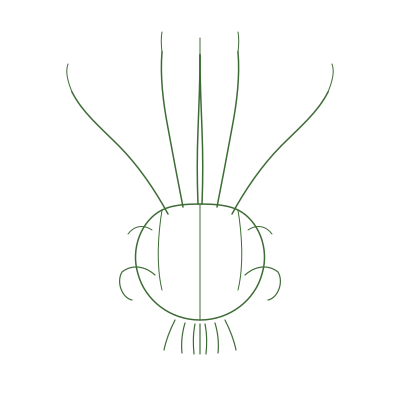
Shallots occupy a useful middle ground between garlic and onion. They cluster — one planted bulb produces a cluster of 4 to 12 new bulbs by harvest — and their flavor is distinctly milder and sweeter than a storage onion, with a hint of garlic. French cuisine treats them as an ingredient in their own right, not as a substitute for onion, and a single shallot in a pan sauce or vinaigrette tends to confirm why.
Most shallots in home gardens are grown from sets — small, dry bulbs planted directly in the ground — rather than from seed. Sets are faster and easier, and the plants they produce tend to be more uniform. Plant sets 4 weeks before your , with the pointed tip up and the base just below the soil surface. Each set will split into a cluster of bulbs over the course of the season. If you're growing from seed, start indoors about 10 weeks before your last frost and treat them like onion seedlings — they take a while to size up.
Shallots share the onion family's sensitivity to competition and weeds. Their shallow roots don't tolerate being shaded out early in the season. Keep the bed weeded through the first six weeks after planting — once the clusters begin to fill in, they tend to shade out smaller weeds on their own. Unlike onions, shallots are somewhat more tolerant of drier conditions once established, but consistent moisture in the weeks before bulb sizing still tends to produce a better yield.
The failure mode to watch for is premature splitting — clusters that separate and fall apart before harvest, usually from leaving the bulbs in the ground too long. Shallots are ready when the ts have died back and fallen over and the papery outer skins are dry to the touch. At that point, lift them promptly. Left in the ground another week or two in wet or humid conditions, the cluster gaps open and the individual bulbs begin to re-sprout, losing both flavor and storage life.
Cure in a dry, ventilated spot for two to three weeks before storing. Well-cured shallots can keep eight months or more, which is one of their best qualities — a fall harvest can carry you through most of the following spring. Save the firmest, best-formed bulbs from the cluster as planting stock for next year; shallots are traditionally grown this way, with each year's best bulbs going back in the ground, and the selection slowly adapts to your soil and climate.
Varieties worth knowing
What can go wrong
Companions
How to propagate
Shallots are most commonly propagated by planting individual bulbs (similar to garlic cloves), which is the simplest and most reliable method. Growing from seed is possible and gives more variety options, but takes longer.
Harvest & keep
Fall-planted (like garlic) in most zones; spring-planted in cold winters. Form clusters of small bulbs.
- Refrigerator
- do not refrigerate cured bulbs
- Freeze
- chop and freeze raw for cooked dishes
- Can
- pickle and water-bath
- Dry
- slice and dry at 125°F
- Cure
- Cure 2–3 weeks in a warm, dry, airy spot with tops on until necks are fully dry.
Cured shallots keep 6–12 months at 50–65°F, 60% humidity — the best-storing allium after garlic.
How it grows where you live
Sources
- Growing Onions, Garlic, and Shallots— University of Minnesota Extension
- Shallots in the Home Garden— Clemson Cooperative Extension
- Allium Production Guides— Oregon State University Extension