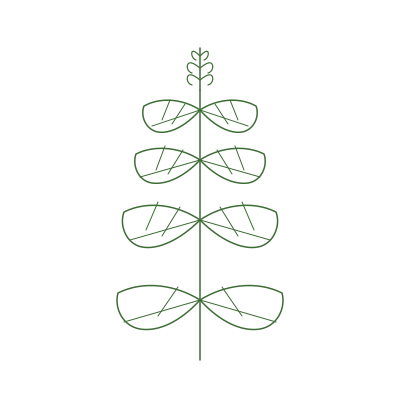
Summer savory is the herb most gardeners have never grown, though every Eurean tradition that cooks beans knows it by name. The pairing is old enough that in German the plant is called Bohnenkraut — bean herb — and there is reasonable evidence that the essential oils in savory do in fact reduce the gas-producing compounds in legumes. Whether or not you care about that, the flavor is worth growing: peppery, resinous, somewhere between thyme and oregano but sharper.
It is an that wants the conditions most herbs hate — poor soil, full sun, and not much water. A savory plant grown in rich, tends to produce lush green growth with weak flavor; the same plant in sandy or gravelly ground develops the concentrated oils that make it worth harvesting. If your garden is too fertile for good savory, grow it in a container with lean , or in the driest corner of the vegetable bed where nog else does well.
Sow directly after your . The seeds are small but reliably if the soil is warm — above fifty-five degrees — and you keep the surface damp for the first week. Thin to six inches once the seedlings are up. Summer savory does not particularly well, and saves the trouble. A ten-foot row is usually more than a household can use fresh, and the dried herb keeps its flavor better than most.
The flavor peaks just before the plant flowers, which tends to happen about eight weeks after sowing. Once flowering starts, the leaves turn bitter and the stems get woody. The way to delay this is to harvest aggressively — cut the top third of the plant every two weeks, and it will branch and stay in leaf production longer. If you wait until it blooms to start cutting, you have already missed the best window.
At the end of the season, when the plant is clearly heading toward seed, cut the whole thing at ground level and hang it to dry in bunches. The dried leaves strip off the stems easily once they are brittle, and a jar of dried summer savory in the pantry is what you reach for when cooking lentils, split peas, or any long-simmered bean dish. It is also one of the herbs that holds up to long cooking without losing its character, unlike basil or parsley, which fade.
One note: savory tends to quickly in hot weather if it is not harvested regularly. A plant that goes to seed in midsummer is functionally finished — the leaves are no longer worth using, and pulling it out to make room for a fall crop is usually the right move. every three weeks through early summer can give you a longer harvest window than trying to keep a single planting productive all season.
Varieties worth knowing
What can go wrong
Companions
How to propagate
Summer savory is an annual herb grown exclusively from seed. It is simple to direct sow and grows quickly in warm weather, reaching harvest size in about 60 days.
Harvest & keep
Annual — sow direct after last frost. Classic partner for fresh beans (kills bean beetles, locals claim).
- Refrigerator
- 5–7 days fresh
- Freeze
- chop and freeze in oil cubes
- Can
- not applicable
- Dry
- dry on a screen — holds flavor well dried
Milder, more delicate than winter savory — the culinary workhorse of the savories.