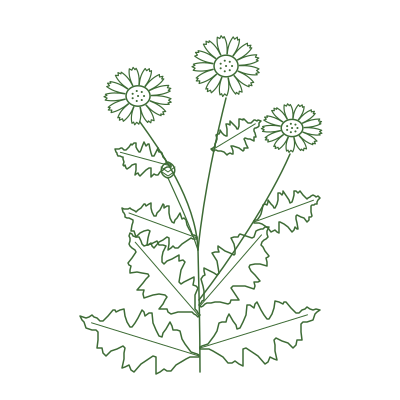
Crown Daisy
Glebionis coronaria
The aromatic chrysanthemum green for stews and salads — fast in cool weather, finished once summer heat arrives.
When to plant: direct sow outdoors about 4 weeks before your last frost.
Updated Oct 2026
At a glance
| Sun | Full sun |
|---|---|
| Water | Moderate |
| Spacing | 6 inches |
| Days to maturity | 30–50 days |
| Soil pH | 6.0–7.0 |
| Soil | Fertile, well-drained soil that holds moisture. Compost at planting is usually enough; steady moisture keeps the leaves tender and the flavor aromatic rather than harsh. |
| Hardiness zones (USDA) | 3–11 |
| Difficulty | Beginner |
| Family | Asteraceae |
| Native range | Mediterranean |
Tip for beginners: Make the fall sowing your main crop: sow about 8 weeks before your first fall frost and cut stem tips above the lowest two or three leaf nodes, which keeps the plants producing side shoots until hard freezes arrive
Main challenge: Bolts once temperatures reach the 80s°F and days lengthen, so a spring planting in a hot-summer region may give only three or four weeks of good cutting
When to plant
- Direct sow outdoors 4 weeks before your last frost.
- Sow again for fall, 8 weeks before your first fall frost.
What can go wrong
- Bolting in heat and long days. Stems stretch, new leaves shrink and turn bitter, and buds form at the tips as temperatures reach the 80s°F and days lengthen. Harvest hard as soon as stems start to elongate, and rely on the fall sowing for the longer, milder harvest.
- Sparse, uneven germination. Seed sown too deep, into crusted soil, or into hot late-summer soil often comes up in patches over one to two weeks. Cover no deeper than 1/4 inch, keep the surface moist, sow thickly, and shade late-summer beds until seedlings emerge.
- Aphids on stem tips. Clusters of small green or black insects on the soft growing tips, with curled or sticky new leaves. Knock them off with a strong spray of water, and cut infested tips during the next harvest.
- Leafminer trails. Pale, winding tunnels inside the leaves, made by small fly larvae feeding between the leaf surfaces. Pick off and discard mined leaves; from sowing keeps the adult flies off small plantings.
- Volunteers spreading beyond the bed. Plants allowed to flower dr abundant seed, and seedlings can appear in paths and neighboring beds. On the central and southern California coast, where it is listed as invasive, cut plants before seed forms.
Growing guide
Crown daisy smells like a chrysanthemum before it tastes like a vegetable. Brush a row of seedlings and the air picks up a resinous, slightly bitter scent — the same note it brings to a pot of spicy fish stew in Korea or sukiyaki in Japan. It is a leafy relative of the garden mum, grown for its tender stems and lobed leaves rather than its flowers, and it behaves like other greens: quick and generous in cool weather, done once summer heat and long days arrive.
about 4 weeks before your , and again about 8 weeks before your first fall frost. Seedlings tolerate light frost, so the spring sowing can go in while nights still dip near freezing. Cover the seed ly, no more than 1/4 inch, and keep the surface moist. is often slow and uneven, taking one to two weeks in cool soil, so sow more thickly than you would for lettuce and thin to about 6 inches once plants have a few . The thinnings are worth eating. Late-summer sowings into hot soil tend to come up patchy; shade cloth over the bed until the seedlings emerge can help.
Two harvest styles work. For baby greens, cut whole plants at 4 to 8 inches tall, roughly 30 days after sowing, and resow every two to three weeks. For a longer harvest from fewer plants, let them reach about 8 inches, then cut the top few inches of each stem, leaving two or three leaf nodes behind. Side shoots grow from those nodes, and you can usually cut again in a week or two. Plants cut regularly stay bushy and tender; plants left alone stretch toward flowering. Consistent moisture matters here, because a dry spell pushes the flavor from aromatic to harsh.
ends the crop. As days lengthen and temperatures climb into the 80s°F, stems elongate, new leaves come in smaller and more bitter, and flower buds form at the tips. Spring plantings in hot-summer regions may give only three or four weeks of good cutting, which is why the fall crop is often the better one: it matures into shortening days and cooling nights. Aids cluster on soft stem tips, and leafminers leave pale, winding trails inside the leaves. Pick off mined leaves and check the undersides of new growth every few days. Beyond those two, pest problems tend to be minor.
The flowers are yellow, or yellow with a pale rim, and the petals are edible. A few plants left to bloom draw bees and drop plenty of seed, and crown daisy self-sows readily. In much of the country that means volunteer seedlings the next cool season. Along the central and southern California coast it means something else: the California Invasive Plant Council lists it as an invasive plant that spreads into coastal dunes, scrub, and grassland, so gardeners there should harvest or deadhead before seed sets. Cut greens wilt within a few days in the refrigerator, so harvest close to when you plan to cook.
Harvest and keep
Expected yield
| Per plant | 1/4–1/2 lb over 2–4 cuttings before bolting |
|---|---|
| Per square foot | 1/2–1 lb over a spring or fall season |
| Peak harvest lasts | 4 weeks |
Cool-season — bolts in heat and long days. Fall crops usually yield longer than spring crops.
Keeping the harvest
| Refrigerator | 3–5 days (wrap in a damp paper towel inside a bag) |
|---|---|
| Freeze | blanch about 1 minute, cool, squeeze dry, and freeze for soups and stews |
| Can | not recommended |
| Dry | not recommended |
Wilts quickly after cutting; harvest close to use. Leaves from bolting plants are tougher and more bitter.
Varieties worth knowing (3)
- Garland Round Leaf · 40–50 days. A large-leaf type with broad, oblong, lightly notched leaves and a milder flavor than serrated types. A good choice for salads and for gardeners new to the taste.
- Garland Serrated Leaf · 40–50 days. Dark green, deeply cut, strongly aromatic leaves whose flavor intensifies as the plant matures. Produces many side shoots, which suits cut-and-come-again harvesting and stews.
- Shungiku (Johnny's) · 30–45 days. An open-pollinated fine-leaf strain with deeply lobed, aromatic leaves. Sold for both baby-green cutting at 4 to 8 inches and full-size bunching.
Companions (4)
How to propagate (1)
Crown daisy is grown from seed, almost always direct sown. It is a fast cool-season annual, so spring and fall sowings and short s matter more than .
From seed · easy · 70–85% success rate
When: Direct sow about 4 weeks before the last spring frost and again about 8 weeks before the first fall frost; resow every 2–3 weeks for a steady supply of baby greens
Sow seed no deeper than 1/4 inch in rows 12–18 inches apart, or broadcast in a wide band. Keep the surface moist; germination is often uneven and takes 1–2 weeks in cool soil. Thin to about 6 inches for cut-and-come-again plants, or leave thick and cut whole at 4–8 inches for baby greens. Seedlings can also be started in cell trays and set out after .
Regional notes (6)
Pacific Northwest
West of the Cascades, mild summers stretch the spring harvest longer than in most of the country, and fall sowings often keep producing into early winter. Watch for slugs on seedlings in wet weather.
Mountain West
Cool nights at elevation slow bolting, and some high-elevation gardens can sow from spring into early summer. Dry air and wind dry the seedbed quickly, so water lightly and often until seedlings are up.
Southwest
A fall-sown winter and early-spring crop in the low deserts and coastal valleys; summer heat ends it. Along the central and southern California coast it is listed as invasive, so harvest or deadhead before plants set seed.
Midwest
Springs warm fast, so sow early and cut often. The fall crop is usually the better one; shade cloth over late-summer sowings keeps the soil cooler and improves germination.
Northeast
Sow as soon as the soil can be worked; the spring window often closes when early-summer heat arrives. A late-summer sowing for fall harvest is more dependable, and row cover lets plants keep producing through the first light frosts.
Southeast
Grow it as a fall-through-spring crop, sowing once late-summer heat breaks. In Florida and along the Gulf Coast, plantings can produce through winter. Spring sowings usually bolt within weeks of the first hot spell.
Saving seed
Saving seed
- Difficulty
- Easy. Self-pollinating and straightforward. One plant, one season, seed comes true.
- Method
- Let a few healthy plants flower, then cut the heads once they turn brown and dry and rub the seed out over a bowl.
- Timing
- Several weeks after flowering, when the flower heads are dry and papery.
- Drying and storage
- Dry the heads further indoors, rub out and winnow the seed, and store it in a paper envelope in a cool, dry place.
- Viable for
- 3 years (when kept dry and cool)
Insect-pollinated; different crown daisy varieties flowering at the same time can cross. Plants drop seed readily — on the central and southern California coast, where it is listed as invasive, collect heads before they shatter.
Sources (3)
- Chrysanthemum, Edible — Chrysanthemum coronarium L. (HS582), University of Florida IFAS Extension
- Glebionis coronaria Profile, California Invasive Plant Council
- Shungiku Asian Green Seed, Johnny's Selected Seeds
Related plants: Acorn Squash, Amaranth, Artichoke, Arugula