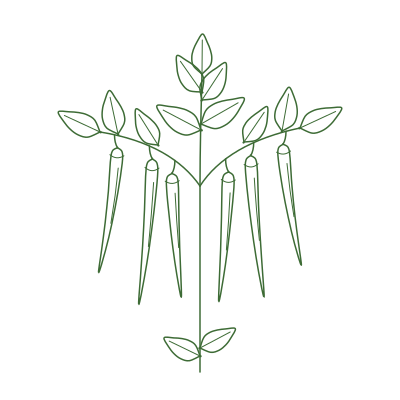
Korean Chili Pepper
Capsicum annuum
The pepper behind gochugaru — eaten green all summer, dried red at the end of a long season.
When to plant: start seeds indoors about 8 weeks before your last frost.
Updated Oct 2026
At a glance
| Sun | Full sun |
|---|---|
| Water | Moderate |
| Spacing | 18 inches |
| Days to maturity | 70–110 days |
| Soil pH | 6.0–6.8 |
| Soil | Fertile, well-drained loam with compost. Warm soil matters more than rich soil, and too much nitrogen gives leafy plants with few peppers. |
| Hardiness zones (USDA) | 4–11 |
| Difficulty | Experienced |
| Family | Solanaceae |
| Native range | Central and South America; Korean types were selected in Korea |
Tip for beginners: Start seeds 8 weeks before your last frost on a heat mat, stake every plant at transplant, and in short-season areas count on green peppers as the main harvest, with red ones for drying as the late-season extra
Main challenge: Red peppers for gochugaru need a long, warm season; in short-season or humid areas much of the crop may stay green or develop anthracnose before it can be dried
When to plant
- Start seeds indoors 8 weeks before your last frost.
- Transplant outdoors 2 weeks after your last frost.
- First harvest about 10 weeks after transplanting.
What can go wrong
- Anthracnose. Sunken, round, water-soaked spots on ripening red fruit, later with rings of dark or orange spore masses. Worst in warm, wet weather and spread by splashing water. Remove spotted fruit, water at the base, so fruit stays off the soil, and rotate away from peppers, tomatoes and eggplant for at least two years.
- Peppers still green at frost. The plant set fruit too late for it to ripen red. Usually a sign of a late start or a slow first month in cold soil. Start seeds on time, into warm soil, and in short-season areas plan on green peppers as the main harvest.
- Purple leaf edges and stalled growth. Transplanted into soil that was too cold. The leaves darken or turn purple at the margins and the plant sits still for weeks. It is cold stress rather than a nutrient problem; the plant usually recovers once the soil warms.
- Snapped branches. Tall plants loaded with fruit split at the forks in wind or heavy rain. Stake each plant at transplant and run string along the row as the plants grow.
- Mold on drying peppers. Peppers dried whole in humid air can rot from the inside before they dry. Slit them lengthwise, dry in a dehydrator or a warm, airy spot, and discard any that turn soft or fuzzy inside.
Growing guide
Korean gardeners grow one pepper for two jobs. The same plant gives crisp green peppers through the summer, eaten raw with a dab of ssamjang, and then, if the season runs long enough, red peppers that get dried and ground into gochugaru. That second job is what makes gochu a long-season cr in most of the US. Green peppers can start about 10 weeks after transplanting. A real crop of red ones for drying usually takes several weeks more, and in a short-season garden the plants may still be loaded with green fruit when the first fall frost arrives.
Treat it like any other pepper, only with more patience. Start seeds indoors 8 weeks before your , on a if you have one; the seed sprouts slowly in cool mix, and a soil temperature near 80°F tends to bring seedlings up in one to two weeks instead of three. Transplant 2 weeks after your last frost, once nights stay above 55°F and the soil feels warm to the hand. Peppers set into cold ground often stall and turn purplish at the leaf edges, and a plant that loses three weeks at the start rarely makes them up at the end. Space plants about 18 inches apart in full sun.
Korean peppers grow taller and more open than most bell peppers, and a branch heavy with fruit can snap in a summer storm. Korean farmers stake each plant and run string along both sides of the row as the plants grow, and that habit works well in a backyard bed too. Many also pinch off the side shoots below the first fork, where the first flower sits, so the plant puts its early growth into the main branches. Water deeply and evenly, mulch once the soil is warm, and go light on nitrogen.
In the US, seed for the milder all-purpose types turns up more often than seed for the hot ones. Kitazawa, now sold through True Leaf Market, carries several Korean , including Gochujang King for drying and Gochu Vita Green for eating fresh. Cheongyang-type peppers, the small sharp ones used in stews, are much hotter; seed for them sometimes turns up at Korean grocery stores and online Korean seed sellers. The disease to know is anthracnose: sunken, circular spots on ripening red fruit, often with rings of tiny dark or orange specks. It spreads by splashing water in warm, wet weather and can ruin a drying crop. Pick off spotted fruit, keep fruit off the soil, and keep peppers, tomatoes and eggplant out of that bed for at least two years.
For gochugaru, wait until the peppers are fully red on the plant and pick them before they soften. Korean farms traditionally dry them in the sun, which can work in dry Western summers but tends to mold in humid air. A dehydrator at about 125 to 135°F is the more dependable route in most of the country: wipe the peppers, slit them lengthwise so moisture can escape, and dry them until they snap instead of bend. Most cooks remove the stems and most of the seeds before grinding. At the end of the season, pick every full-sized pepper before your first fall frost; green ones keep a week or two in the refrigerator or can go into soy-pickled jangajji.
Harvest and keep
Expected yield
| Per plant | 1–2 lb of fresh peppers; dried, a few ounces of gochugaru |
|---|---|
| Per square foot | 0.5–1 lb fresh at 18-inch spacing |
| Peak harvest lasts | 10 weeks |
Picking green peppers steadily keeps the plant setting new fruit; leaving fruit to ripen red slows new fruit set. Dried peppers weigh a small fraction of fresh, so a year's gochugaru takes more plants than most first-time growers expect.
Keeping the harvest
| Refrigerator | 1–2 weeks for green peppers (unwashed, in a bag) |
|---|---|
| Freeze | freeze green or red peppers raw, whole or sliced — no blanching needed |
| Can | soy-vinegar pickles (jangajji) keep in the refrigerator; use a tested recipe for water-bath canned pickled peppers |
| Dry | slit fully red peppers lengthwise and dry at 125–135°F until brittle; remove stems and most seeds, then grind for gochugaru |
Keep gochugaru airtight in the refrigerator or freezer to hold its color and flavor. Wear gloves when cutting hot types.
Varieties worth knowing (3)
- Gochujang King. Kitazawa hybrid bred for drying. Long pepper, about 6 inches, mild for a hot pepper; the red fruit is dried for gochugaru. Listed at 90–100 days from transplant, so it needs an early start.
- Gochu Vita Green. Kitazawa hybrid grown mainly for fresh green peppers to dip in jang. Glossy, dark green, about 6 inches long and mild. A late variety by the seller's own listing.
- Wa Mae Wo (Yeori Gochu). Kitazawa hybrid sold as a dual-purpose pepper: young green fruit for fresh eating and jangajji, ripe red fruit dried for gochugaru. Listed at 100–110 days from transplant.
Growth habit (1)
The same crop can grow as a compact bush, a sprawling vine, or something in between. Pick the habit before you buy seed: it decides how much space the plant takes and whether the harvest comes all at once or over many weeks.
Upright bush
Korean peppers grow as upright plants about 30–36 inches tall, more open and branching than bell peppers. A fruit-laden plant tends to split at the forks without support.
Pruning and support: Pinch side shoots below the first fork. Stake each plant and run string along the row as it grows.
Examples: Gochujang King, Gochu Vita Green
Companions (5)
How to propagate (1)
Korean chili peppers are started indoors from seed well before the last frost. They need a long, to ripen red, and they are slow to in cool soil.
From seed · moderate · 80%+ success rate
When: Start indoors 8 weeks before the last frost date; transplant 2 weeks after it
Sow seeds 1/4 inch deep in and keep it at 80–85°F with a heat mat; germination usually takes 7–14 days. Grow seedlings under strong light, once to 3–4 inch pots, and for a week. Transplant 2 weeks after the last frost once nights stay above 55°F and the soil is above 60°F. Space plants 18 inches apart and set a stake at planting time.
Regional notes (6)
Pacific Northwest
West of the Cascades, nights are often too cool for peppers to ripen red before the first fall frost. Most gardeners get a good green harvest; for red peppers to dry, grow a few plants in large pots against a south-facing wall or under a hoop house. East of the mountains, the hotter, drier summers ripen red peppers more reliably.
Mountain West
Short seasons and cold nights at elevation make red ripening hard above about 6,000 feet, though green peppers are often worth growing. At lower elevations the dry air is an advantage: red peppers can dry outdoors in shade with good airflow, much as they do in Korea. Use on cold nights.
Southwest
Plenty of heat for ripening, and the dry air suits sun-drying. Temperatures above about 95°F can cause blossom drop, so afternoon shade cloth and steady drip irrigation help keep fruit setting. In the low desert, plants often produce in two flushes, before and after the hottest weeks.
Midwest
Summers are usually warm enough to ripen a crop of red peppers if plants go out on time into warm soil. Black plastic at planting and stakes against summer storms both pay off. Pick red peppers promptly as they color; late-season rain can spread anthracnose on ripe fruit.
Northeast
Green peppers come readily, but red ripening often starts late and gets cut short by the first fall frost, especially in northern New England. An early indoor start, black plastic mulch to warm the soil, and a row cover on cold nights at both ends of the season all help. Plan to finish drying indoors; outdoor air is usually too humid.
Southeast
The long season ripens plenty of red fruit, but warm, wet weather favors anthracnose on that fruit and makes sun-drying unreliable. Mulch, drip irrigation, and prompt removal of spotted fruit matter more here than anywhere else. Peppers often stop setting fruit in the hottest weeks and start again as nights cool.
Saving seed
Saving seed
- Difficulty
- Medium. Some cross-pollination risk or a fussy processing step. Manageable with a little attention.
- Isolation distance
- 500 ft. Without isolation or hand-pollination, it can cross with nearby varieties.
- Method
- Scoop seeds from a fully red, ripe pepper and air-dry them on paper.
- Timing
- When the fruit is fully red, before it softens.
- Drying and storage
- Dry 2 weeks, paper envelope, cool dark.
- Viable for
- 3 years (when kept dry and cool)
Most Korean varieties sold in the US are F1 hybrids, so saved seed is unlikely to grow true. Hot and mild peppers cross — isolate 500 ft or bag flowers if you save from an open-pollinated type.
Sources (3)
- Growing peppers in the home garden, University of Minnesota Extension
- Anthracnose disease of vegetables, University of Maryland Extension
- Pepper Seeds - Hot - Korean - Gochujang King - Hybrid (growing notes), True Leaf Market (Kitazawa Seed)
- AnthracnoseSunken, dark circular lesions on ripening fruit, sometimes with salmon-colored spores in the center.
- AphidSoft, clustered insects on new growth causing curled leaves and sticky honeydew.
- Blossom DropFlowers fall before setting fruit, often during temperature extremes or after weather stress.
- Blossom End RotDark, sunken, leathery patch on the blossom end of tomato or pepper fruit. The developing fruit is short of calcium, usually because of uneven watering rather than a lack of calcium in the soil.
- Gray Mold (Botrytis)Gray-brown fuzzy mold on fruit, flowers, or stems — soft, collapsing tissue beneath the coating in cool, wet conditions.
Related plants: Acorn Squash, Amaranth, Artichoke, Arugula